
What is PMOS (formerly PCOS)?
PMOS (polyendocrine metabolic ovarian syndrome) is the new name for PCOS, adopted in 2026 after an international consensus published in The Lancet. It is a hormonal and metabolic condition that affects the ovaries, the menstrual cycle and how the body uses insulin. It's common, and it can be managed. You're far from the only one dealing with it.
See follicare · from RM198Why was PCOS renamed PMOS?
The old name focused on ovarian cysts, which not every woman has. The new name reflects what PMOS really involves: several hormone systems and the body's metabolism, as well as the ovaries.
How common is PMOS?
PMOS is one of the most common hormonal conditions in women of reproductive age: around 1 in 8 women (10 to 13%) worldwide, according to the 2023 International Evidence-based Guideline for PCOS.
What causes PMOS?
- Family history and genetics
- Lifestyle and environment
- Higher insulin and androgen levels
- Chronic low-grade inflammation
What are the signs of PMOS?
A diagnosis usually needs at least two of these three:
- Irregular or absent periods
- Signs of excess androgens, such as extra hair growth or acne
- Polycystic ovaries on an ultrasound
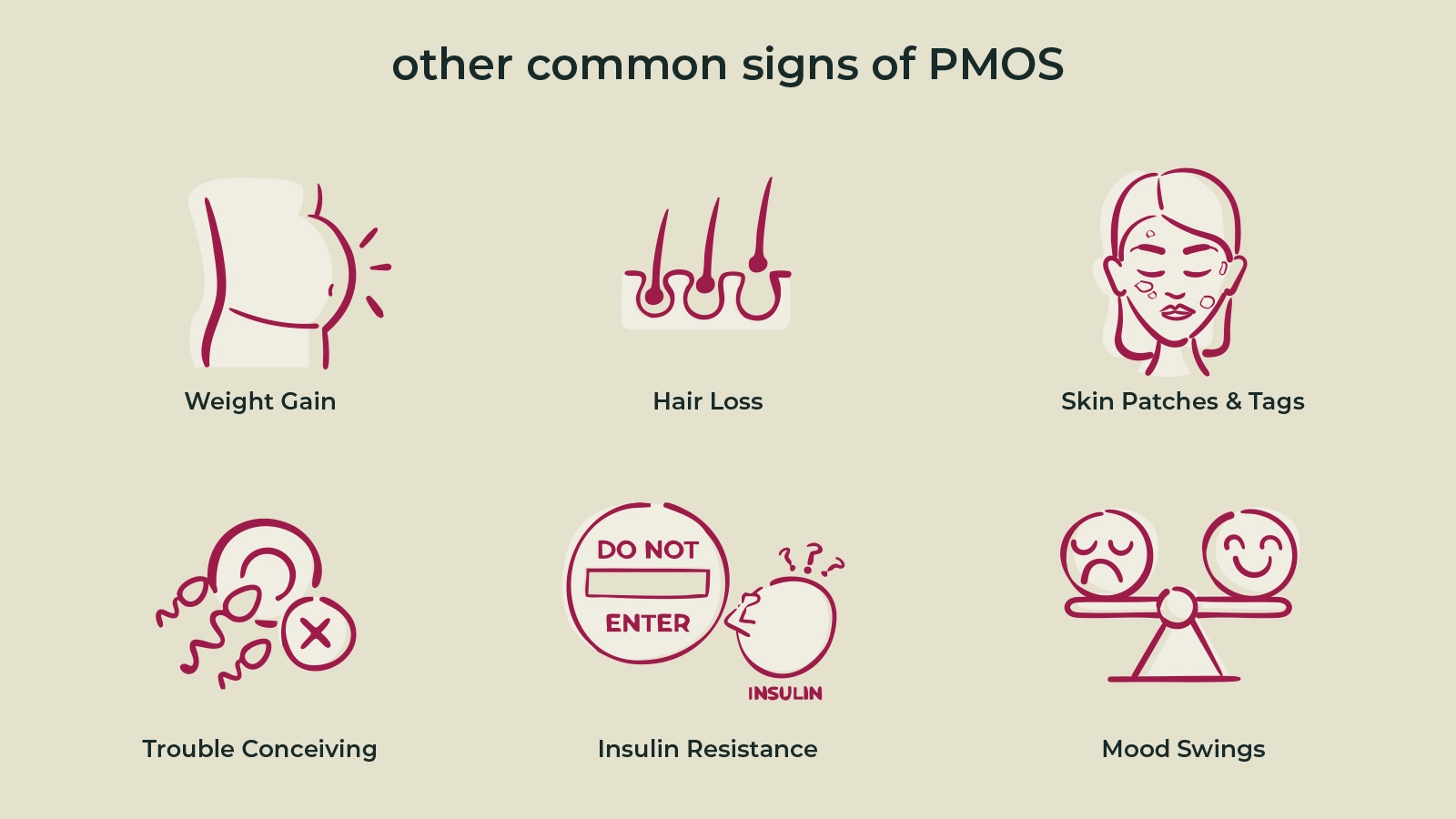
Other signs can include weight gain, hair thinning, skin tags and dark patches, difficulty conceiving, insulin resistance and mood changes.
Is there a cure for PMOS?
There is no cure for PMOS, but it can be managed through everyday habits, medical care and the right support.
How does insulin resistance fit in?
Many women with PMOS have insulin resistance, where the body needs more insulin to keep blood sugar steady. Higher insulin can push up androgen levels and disrupt ovulation, which is why managing it matters.